Showing posts with label editing. Show all posts

Monday, March 14, 2022

An Editor's Golden Touch

from Sharon Ledwith


Do you want to know how to make your manuscript stronger? Polished? Close to publication? Psst…I can help with that. Correction—my former editor, Kathy Teel, can help with that. The following advice is gold to writers seasoned or new. Read on…

·        The word "as" is not your friend. It is almost never your best choice. In any MS, find all occurrences of it and cut at least half. This is especially true when it occurs near a dialogue tag.

·        You don't need both an action tag and a dialogue tag. For example: Jojo sneered at him, saying, "That was helpful." Those should look like this: Jojo sneered. "That was helpful." (This is where many of those words were cut)

·       Dialogue tags go after the first clause in the dialogue, not at the end, unless it's a short bit of dialogue and we know exactly who's speaking. "Thanks," Monkey said. "You never know when you're going to need an antique bassoon."

·        Avoid adverbs, especially around dialogue tags. "I hate you, you big fat jerk!" Merry screamed furiously. No, really, he's furious? We got that from the dialogue AND the verb (scream), you don't have to beat us with it by adding on an adverb.

·        People don't usually use each other's names very much when speaking together.

·        A sentence with 2 independent clauses does not have a comma: My daughter turned on Dr. Who and her friend rolled her eyes. NOT: My daughter turned on Dr. Who, and her friend rolled her eyes.

·        Use "said" 95% of the time. Delete your thesaurus' entry for the word "said," and don't use replacement words for it, except in very rare absolutely necessary cases.

·        Don't use dialogue tags at all unless it's otherwise unclear who's speaking. If you need to indicate who's speaking, try to use an action tag instead of a dialogue tag: Jingle jumped out of his chair. "I know that elf!" 

That’s it. Well, not all. There’s always something when it comes to polishing and gleaning your manuscript to share with the world. The above sage advice was passed on to me because I made these common mistakes. I thought I’d share them so that any writer reading this may in turn, better their best. 

Here’s a glimpse of the premises of both my young adult series: 

The Last Timekeepers Time Travel Adventures…

Chosen by an Atlantean Magus to be Timekeepers—legendary time travelers sworn to keep history safe from the evil Belial—five classmates are sent into the past to restore balance, and bring order back into the world, one mission at a time. 

Children are the keys to our future. And now, children are the only hope for our past. 

Mysterious Tales from Fairy Falls Teen Psychic Mysteries…

 Imagine a teenager possessing a psychic ability and struggling to cope with its freakish power. There’s no hope for a normal life, and no one who understands. Now, imagine being uprooted and forced to live in a small tourist town where nothing much ever happens. It’s bores-ville from the get-go. Until mysterious things start to happen. 

Welcome to Fairy Falls. Expect the unexpected. 

The Last Timekeepers Time Travel Adventure Series:

The Last Timekeepers and the Noble Slave, Book #3

MIRROR WORLD PUBLISHING ׀ AMAZON ׀ BARNES & NOBLE ׀

The Last Timekeepers and the Dark Secret, Book #2 Buy Links:

MIRROR WORLD PUBLISHING ׀ AMAZON ׀ BARNES & NOBLE ׀

The Last Timekeepers and the Arch of Atlantis, Book #1 Buy Links:

MIRROR WORLD PUBLISHING ׀ AMAZON ׀ BARNES & NOBLE ׀

Legend of the Timekeepers, prequel Buy Links:

MIRROR WORLD PUBLISHING ׀ AMAZON ׀ BARNES & NOBLE ׀

Mysterious Tales from Fairy Falls Teen Psychic Mystery Series:

Lost and Found, Book One Buy Links:

MIRROR WORLD PUBLISHING ׀ AMAZON ׀ BARNES & NOBLE ׀

Blackflies and Blueberries, Book Two Buy Links:

MIRROR WORLD PUBLISHING ׀ AMAZON ׀ BARNES & NOBLE ׀ 

Sharon Ledwith is the author of the middle-grade/young adult time travel adventure series, THE LAST TIMEKEEPERS, and the award-winning teen psychic mystery series, MYSTERIOUS TALES FROM FAIRY FALLS. When not writing, researching, or revising, she enjoys reading, exercising, anything arcane, and an occasional dram of scotch. Sharon lives a serene, yet busy life in a southern tourist region of Ontario, Canada, with her spoiled hubby, and a moody calico cat. 

Learn more about Sharon Ledwith on her WEBSITE and BLOG. Look up her AMAZON AUTHOR page for a list of current books. Stay connected on FACEBOOK, TWITTER, PINTEREST, LINKEDIN, INSTAGRAM, and GOODREADS.

 BONUS: Download the free PDF short story The Terrible, Mighty Crystal HERE

Monday, January 14, 2019

EDITS - The Ugly Truth

by Carol Browne

I met with a new proofreading client recently and looked at his manuscript. It needed a lot of work. In fact, he needed an editor not a proofreader. He had no idea what the difference was any more than he knew what an editor does. As I tried to explain it all to him, it took me back to my own beginnings as a newbie author and I remembered what a shock the editing process had been. I had no idea what was involved; writing the book turned out to have been the easy part! So, aspiring writers, here is a brief description of what lies in store for you.

Let’s assume that you were able to construct a fairly presentable manuscript and submit it to a publisher with strict adherence to their submission requirements and that said publisher has agreed to publish the work. Let’s also assume that you have thrown your hat in the air, danced on the table, bought a round of drinks for everyone in the pub, day dreamed about fame, fortune and winning the Booker Prize and now await the next step. Once the excitement has worn off, the real work begins.
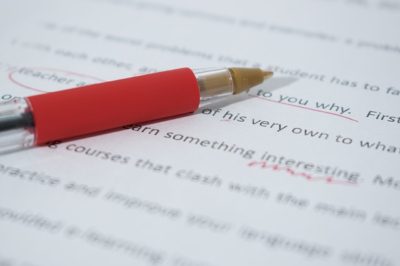

This is what happened to me: I was told who my editor was, that they were editing my manuscript and it would then be emailed to me so I could address the editor’s changes and suggestions. I had done a fair bit of proofreading by then but proofreading is to editing what a string quartet is to the London Symphony Orchestra. Straightaway, I was shocked when I saw that most of Chapter One had been removed (“You can condense it into a small paragraph somewhere if you really must.”) and great chunks of the narrative had been torn out. Thousands of words were scattered to the four winds, never to be seen again. Thousands! The book I had given years of my life to was purged and purified. And this is what you call a structural edit.

And guess what … I ended up with a much better book. Did I manage to condense the pruned pages into one small paragraph? You bet I did! It was the sort of exercise that tones up the writing muscle. I learnt how to write more succinctly and move the narrative along without unnecessary clutter. Editors I’ve had since have not been so ruthless, but it’s probably because I have become a more competent writer.

Once the structural editing is done, it’s time for line editing. This is exactly what it sounds like: going through the narrative line by line, addressing punctuation, spelling, typos, syntax and word choice. The editor will often suggest the author uses a better word or adds some description or makes the dialogue more natural. There will be all kinds of errors or inconsistencies in continuity. Have you used the same word three times in quick succession? Perhaps a character does something incongruous and you never noticed? Did you just mention someone, having forgotten you killed them two chapters ago?

You can imagine how long and involved a process this can be, particularly if you have a book as long as mine was. (‘Was’ being the operative word!) But your editor is trying to make your book the best it can be. You may have to lose your favourite metaphor, pluck out padding you enjoyed reading, delete swathes of dialogue that made you laugh but did nothing to further the plot or develop the characters. In the end it is all worth it.

Hopefully it is at this point that your publisher will give their blessing to the final edits of the manuscript.

But that’s not the end of the process, because it‘s then that a proofreader takes over and that proofreader is very often YOU. Having worked your way through your manuscript umpteen times already until you could happily throw it at the wall and walk away forever, it is up to you to read through ALL of it carefully and look for any errors that have been missed.

Yes, the editing of a manuscript is a lot of work: Weeks of daily toil; long hours at the keyboard; chewed finger nails; bloodshot eyes; gallons of coffee. And finally, if you are lucky, your book emerges, all sparkly and beautiful, like a polished jewel!

One more thing – and this is extremely important advice for aspiring writers – you need to familiarise yourselves with the Track Changes function of Word, because you are gonna need that knowledge! I was lucky in that I had a proofreading course under my belt before I started, so Track Changes didn’t come as a complete surprise to me. This is a function that allows many people to edit and proofread a document without the changes they make to that document being lost – hence the changes are tracked, very much like sending a parcel – but Word also remembers the original document so nothing is lost (we can’t always say the same about the mail service!). Delete a paragraph, say, and it will be held in the margin in a sort of bubble. Only when the author accepts that deletion will that paragraph be completely removed from the document.

Well, this isn’t an article about Track Changes! Suffice it to say, as with many things, there are tutorials on You Tube if you really feel this is beyond you. Trust me, it isn’t. If I can manage to use this function, anyone with a modicum of computer skills will have no problem.

So, budding authors, prepare yourselves for the editing process; but don’t worry about it because it’s not all hard work and learning the craft, it can also be a lot of fun.

Godwin's adventures in Elvendom left him a changed man, and now bereavement has darkened his world.

In another dimension, a new Elvendom is threatened by the ambitions of a monstrous enemy. Who—or what—is the Dark Lady of Bletchberm?

And what has become of Elgiva?

Reeling from the loss of their Elwardain, the elves ask Godwin for help.
Transported into a strange world of time travel and outlandish creatures, will he succeed in his quest against impossible odds, or will the Dark Lady destroy everything the Elwardain fought to preserve?

EXCERPT

His heart thumping in his throat, Godwin took in all the details of the goblin’s appearance. The creature was probably four feet tall at most and was wearing a sleeveless leather tunic and short leggings over his skinny frame. His arms and legs were hard with thin bands of muscle; sinews moved like taut wires beneath the scant flesh. Godwin fancied that the goblin’s skin had a sickly, greenish tint, but in the firelight it was impossible to be sure.

The goblin moved in an awkward manner, not upright like a man or an elf, but slightly stooped and with bent knees, as though on the verge of pouncing. The dome of his head was as bald and smooth as a pebble, and his very long, pointed ears were attached on either side like those of a lynx. His large eyes glittered like wet malachite and between them a long, sharp nose protruded with all the aesthetic attributes of a small parsnip.

The goblin’s large eyes widened as they swivelled in Godwin’s direction, making his stomach curdle in fear and revulsion.

“Only two of you, then?” said the goblin with a smirk. “Not much of a challenge, is it?” He beckoned with his sword and others of his kind began to creep into the circle.

Godwin glanced around. There were six more of them, each carrying a sword of a curious design, the blade like a thin, metal spiral with a very sharp point. A visceral fear welled up inside him at the sight of these weapons, but he didn’t know why.

Born in Stafford in the UK, Carol Browne was raised in Crewe, Cheshire, which she thinks of as her home town. Interested in reading and writing at an early age, Carol pursued her passions at Nottingham University and was awarded an honours degree in English Language and Literature. Now living and working in the Cambridgeshire countryside, Carol usually writes fiction and is a contracted author at Burning Willow Press. Being Krystyna, published by Dilliebooks on 11th November, 2016, is her first non-fiction book.

Stay connected with Carol on her website and blog, Facebook, and Twitter.

Wednesday, April 05, 2017

LET'S TALK FORMATTING

by Marci Clark

(writing as Marci Boudreaux and Emilia Mancini)

As an editor/designer, I see manuscripts come at me with all kinds of crazy, wonky, how-the-hell-did-you-do-that formatting. Be kind to your editor/designer, peeps. Clean up your mess a little before submitting it.

Some houses provide a style guide. Double check for any submission rules before sending your book and risking a default rejection. If the house is relaxed on their formatting, that doesn't mean you shouldn't bother cleaning up the formatting any less than you'd bother cleaning up the content.

If they don't have a style for submissions, a pretty basic format is appreciated. Centered chapter headings, .3 to .5 indent on new paragraphs, 1.5 spaced lines, all black text in a basic font/typeface (making it "pretty" won't impress your editor), and no all capped or underlined words (use italics for emphasis). Something like this:
Here are a few shortcuts when it comes to cleaning up your manuscript. Note: I have a PC, so I don't know if these translate to a Mac.

Extra Spaces:
We are no longer a society of the double space after ending a sentence. One space. One. But if you have a habit of adding two, no problem. There's a quick fix. Open up your find/replace option. In the find box, hit the space bar twice. In the replace box, hit the space bar once. Then select replace all. Do that until the find/replace reaches zero.

Tabs:
No. Just no. Do not use the tab button when indenting. Go to the top of the document, select the page layout tab an set your indent for the document there. Sometimes hitting the tab is natural. You can fix that as well. In the find/replace option, find ^t and replace with nothing. Leave the replace box blank. Replace all. Then select all on your document and set your tab as indicated above-through the page layout option.

Spaces Before or After Paragraphs:
These hidden spaces may seem innocent enough, but if you are self publishing, these extra spaces can cause the designer a lot of stress depending on which program they use to convert your document. Remove extra spaces by again using the find/replace option. Find: space bar^p, and replace with ^p. Replace all. Do the same, but with the space on the other side of the paragraph break. ^pspacebar, replace with ^p. This will give you clean returns throughout.

Soft Returns:
These also are pain when formatting. Find/replace ^l with ^p.

As for the document, please, please, PLEASE do not hit the enter button multiple times to start a new chapter. Nooo!!! Use a solid page break. Ctrl+Enter will break the page and give you (and your designer) a clean start on the next chapter. The problem with hitting enter over and over is that while it may push the chapter heading to a new page on your computer screen, it doesn't always work out that way on your editor's screen. If not, your chapter headings end up in all kinds of crazy places. Just do a page break, and nobody has to wonder WTF.

There are a dozens of little things that could also be done, but this really hits the big ones. Follow these tips, and your editor/designer will love you just a little more.

Marci Clark is a freelance editor, book/cover art/promo materials designer, published author, and all around publishing nerd. She's worked for Kensington Publishing since 2014, as well as several indie houses over the years. She is proficient in self-publishing and would love to help you with all your publishing needs, including premade or custom cover art.

Reach out to her at marci.clark.editing@gmail.com if you'd like to discuss your project with her.

Sample taken from Jessica's Wish (Stonehill Romance Book 4)


Jessica's wish2


There is nothing Jessica wants more than to be like everyone else, but between her Down syndrome and her colorful family, “average” isn’t part of her vocabulary. This year when she blows out eleven candles on her homemade vegan cake she makes the same wish she’s made for as many birthdays as she can remember: she wants a mother.

Jessica’s father Phil has worked his entire life to create a more stable childhood for his daughter than he had. But a supportive mother, a recently returned father, rainbow pancakes, and princesses can’t heal the dark void left in Phil’s heart which he won’t even admit is there.

When Mallory's mother’s life unexpectedly turns upside down, Mallory realizes her dreams come second to her heart, and she leaves her dream job in a big city to return home set on helping her fiercely independent mother recover. After forming a unique bond with Jessica—and a friendship with Jessica’s hot father—Mallory finds that in coming back to Stonehill she might just have found a way to make all of her dreams come true.

But as their families start pushing Phil and Mallory together, old insecurities and Phil’s worst fears threaten to break up the happy trio and catch Jessica in the emotional crossfire.

Monday, April 11, 2016

PROFESSIONAL MISCONCEPTIONS

Emilia Mancini is more than just hot sex. She's an author with strong opinions on journalism and she's here today to share them. The floor is all your, Em!

My editor side has seen an influx of book submissions with journalists as main characters lately. This is great for me. I love reading about journalists!

Photo by Graur Codrin
I’m a freelance writer for a local magazine in the daylight hours. Yes, I cover features instead of hard news, but I had to go to journalism school for this, and I certainly have to live the journalist life: deadlines that bitch slap the crap out of me, editors who aren’t happy with my story, sitting outside (not exactly stalking) the house of a source who won’t return my calls so I can catch them face-to-face…

So, yeah, I really love reading stories about journalists. I even wrote one as Marci Boudreaux.

But I get a little worked up when I read misrepresentations of reporters. Just this week, I vented to the LLL ladies about this very topic (which lead to this lovely post). Now I know you are writing fiction and things get twisted and turned and exaggerated, but if you are writing contemporary, you have to be somewhat realistic and I’ve found that frequently isn’t happening when journalists are being written into fiction.

I just want to take a moment to clear the air a little so if you are considering using a print journalist as a character in your book (for good or for evil) some of these stereotypical, panty-bunching mistakes aren’t made in your manuscript.

1 - Easily my biggest issue with people writing newspaper articles is using the phrase “this reporter.” As in, “This reporter was told the world is round.” This phrase may have been used 100 years ago, but it isn’t used now. It insinuates the writer into the article, which is completely unprofessional and no newspaper editor would let this in. Ever. Reporters are telling the facts, without opinion, personal interpretation, or commentary…unless they are an opinion columnist.

TheMessenger_fullres
2 - Reporters don’t have money to throw around. Newspaper reporters make less than 30K per year, maybe 35K if they work for a decent-sized paper, but overall, we are a very poor lot. In The Messenger, my main character came from money. She had a nice apartment, clothes, and car because she used her trust fund to get these things. She was the misfit in the news office based on the those with vs. those without mentality of her co-workers. Overall, unless you set it up otherwise, your reporter should drive an average car, shop at average stores, and live in average homes. Sure, there are exceptions, but your everyday newspaper reporter does not drive a Lexus.

3 - Sensational commentary in a news article would never happen. Reporters write facts. They have sources (quotes from experts, witnesses, or validated research) to back up these facts. This is a requirement for making it to print because people like to sue newspapers. Editors will not approve/print scandalous content. Serious reporters aren’t going to insert opinion, personal jabs, or any other commentary.

4 - Newspapers as a whole are broke. This means reporters take their own pictures with the shared office camera and drive their own cars to get the story. Newspapers do not provide photographers to go on assignment with reporters and they don’t provide transportation (though if a reporter is full-time, gas mileage may be reimbursed).

5 - The last time I, or one of my co-workers, wore a suit to an interview was…oh, right, never. Print journalists don’t dress in business suits. At least not your average reporter. Think business casual. Khakis or nice jeans and a semi-dress shirt. A skirt and blouse. One editor I know loves his corduroys, but suits are just not something I’ve seen in the newsroom—except for the publisher, but he’s in business meetings all day with other men/women in suits, so that makes sense.

6 - I know reporters are usually viewed as a force of evil. Some probably are. We share the horrors of the world more than we share the laughs. But, honestly, if the media only covered the good things, the public would criticize them for not being truthful about the events of the world. Most people view reporters as heartless demons who would step over dying babies to get the scoop. The truth is, we’re human, too. Maybe we don’t break down on the scene, but I guarantee you, even the toughest of reporters have gotten emotional over something they covered. Don’t portray your journalist as a one-dimensional heartless story-grabbing asshat. That’s a stereotype that has been overplayed.

Okay, so that kind of wraps up the biggies. The moral of this blog post? Do some research, whether it is a journalist or a doctor you are including in your manuscript. One phone call and a few questions is all you need to make sure you aren’t making crucial mistakes when representing a profession. Most people are more than happy to tell you what their job is really like. All you have to do is ask.

Here's a little teaser from my latest sexy release for your reading pleasure.

It took Kyle one look to realize he wanted to seduce his best friend’s mother. And one kiss to realize he didn't have to.

It was lust at first sight for Kyle when he met his roommate Justin’s mother Kate. Kyle, a college transfer, was too far from home to visit on short school breaks, so Justin took him to Minneapolis where his mother was serving up a family meal for Thanksgiving.

One look left Kyle with a healthy obsession for Kate which grew with each visit. When he landed an internship in Minneapolis, he moved in with Kate for the summer, and got in touch with his voyeuristic side. It wasn’t until one late evening and a few too many glasses of wine that Kyle began to suspect his attraction wasn’t one-sided.

When he dared to push the issue, he found Kate more than willing to succumb to his seduction.

BUY LINKS
Amazon - Barnes & Noble


Emilia Mancini is the naughtier side to author Marci Boudreaux. Emilia stays hidden in the shadows like a nefarious side kick, slipping out only when the stories Marci wants to share are a little too grown up to be called sweet romance.

Seducing Kate is Emilia’s second release and, at least for the moment, her crowning glory.

Be sure to check out the Pinterest board for Seducing Kate.

Visit Emilia on her website. Stay connected on Twitter and Facebook.

Friday, August 03, 2012

EDITING IN THE REAL WORLD

Ernest Hemingway step aside because you think you’ve written the newest Great American Novel. Sorry to deflate your ego, but…

Good writing will not get any easier if you won’t work at it. It’s called learning your craft. So sit back, novice, grab your favorite red pen and get educated.

Self-editing is one of the hardest aspects of writing. It’s now time to delete all those beautiful words full of your soul. Can’t do it? Won’t get published.

There are several steps in editing and not necessarily in this order;

1. Formatting
2. Spell check
3. Line edit
4. Point of View
5. Punctuation
6. Setting the chapter
7. Tighten the writing
8. Redundancies
9. Passive writing
10. Syntax
11. Get rid of the crap

We’ll take them one at a time to give each point proper consideration.

FORMATTING

The writing industry has common format requirements. Most publishers want the submission in;

• Times New Roman or Courier. Font is 12 pt.
• Use a 1” margin on all sides.
• Double-space the entire book.
• Start each new chapter on its own page, one-third of the way down.
• Begin the body of the chapter four lines under the chapter title.
• Indent is either 0.03” or 0.05” for each new paragraph

I use Microsoft Word. All of this can be preset. Open your manuscript to Home. Click Paragraph on your toolbar. You’ll find everything you need to format successfully under Indents and Spacing.

If you’re really new to all this and haven’t done the formatting before you typed your novel, it’s easy to fix. Highlight the manuscript, then click Paragraph on your toolbar and continue with the above directions.

Do not take my instructions as Gospel. You should know the publisher you’re striving to impress. Go onto their website and print out their complete Guidelines, then do exactly as they instruct.

SPELL CHECK

Aah, the writer’s best friend. No way, kids. Spell Check is great for the basics, but it can’t tell the difference between ‘buy’ and ‘by’. As you’re reading your work for the nineteenth time you’ll uncover misused words. At that time make the corrections. Do not procrastinate.

After you’ve formatted the novel, return to the toolbar and click on Spell Check. As it scans your work it will come up with incorrect spelling and phrasing. Be sure of what you want changed. Do not arbitrarily accept all the corrections.

Over the years, I’ve found if I read my manuscript backwards spelling errors jump right off the page. The backwards action stops my brain from assuming what I wrote is correct. All you do is read and edit the last page first, then proceed forward, one page at a time.

LINE EDITING

It’s a simple procedure, but very tedious. You must line edit carefully before you submit to a publisher. You have about thirty seconds to catch the editor’s eye and entice them to read more of your book. If he or she sees typos, incorrect words (buy vs. by), or skewed sentence structures, it’s the rejection pile for your baby. And by all means, pay close attention to your punctuation.

This is how you do it;

• Print out a hard copy
• Grab a 12 inch ruler.
• Lay it under line one.
• Read each word slowly. Aloud is best.
• Focus
• Make the corrections using a colored pen on the hard copy.
• Insert the corrections into your computer text.
• Take breaks or your mind won’t see the flaws.

POINT OF VIEW – SYNTAX


We’ve discussed these topics in previous weeks. Go back through the Friday posts if you’re not sure on a particular step to locate the lecture.

GET RID OF THE CRAP

You’re aghast anyone would dare to think your work is less than stellar. Get over yourself. I’d bet my next royalty check Stephen King, James Patterson, and Kathy Reichs still go through the same process yours truly does to make their book as good as possible. And that process is all the above and my last words of wisdom;

If it doesn’t move your story forward, it is crap. Get rid of it.

Have a wonderful weekend. I'll be back Monday with Annie Seaton. Until then...

Happy Writing!

Sloane Taylor

Friday, July 27, 2012

The Best Selling Author's Diet

It’s salad days, folks, because it's time to put your manuscript on a diet. Cinch your belt as tight as you can and let’s self-edit.

What’s self-edit? It means you eliminate all the fat, all the extra words that don’t move the story forward, and all the passive words bogging down your scenes.

REDUNDANCIES are unnecessary words over describing an action.

The following are examples and if you look hard you’re bound to find several in your work.

• David pulled out the bench and sat down in the chair.
The word ‘down’ is unnecessary because that’s the only way David can sit.

• David jumped up. David stood up.
‘Up’ is unnecessary because, again, that’s the only way he can go if he’s jumping or standing.

• Melissa shrugged her shoulders.
I love this one because it eliminates two words, ‘her shoulders’. What else could Melissa shrug?

• Melissa loved to see David’s well-toned chest and how it tapered down to his narrow waist.
‘Well’ and ‘down’ go. The sentence should read;
Melissa loved to see David’s toned chest and how it tapered to his narrow waist.
The corrected version is cleaner and right to the point.

A few other examples are;

• Blue in color
• Climbed up the stairs
• Eased slowly
• Nodded his head
• Stomped heavily
• Stood to his full height
• Terribly bad

PASSIVE WORDS are used in our speech but should never be used in writing. You’re telling a story and must keep the action moving. These words are showing not telling.

• Is
• Might
• Seemed
• Started to
• Was
• Were

Readers want action therefore you must construct your sentences with powerful verbs.

The same reasoning applies to adverbs and adjectives. The following is but a small selection and offer zero to paint a picture.

• A little
• Almost
• Even
• Just
• Perhaps
• So
• Some
• Very
• When

Most, if not all, adverbs and adjectives weaken your writing and need to be eliminated from your story.

PREPOSITIONS are not your best friend. Go through your work and highlight every preposition, including prepositional phrases. If you have an abundance you must clear them out to create stronger sentences.

THAT is a word we seldom need in a sentence. Its filler and a word you need to eliminate from your writing and your vocabulary.

The Best Tip of the Day;

Do a word search to discover how many times you’ve used a specific word. Reread your sentence and replace the overused word with a stronger verb or noun.

Have a wonderful weekend. I'll be back Monday with Libby Mercer and tips for an unusual Paris vacation. Until then...

Happy Writing!

Sloane Taylor