Showing posts with label series. Show all posts

Monday, March 09, 2026

A Behind the Scenes Look

at Creating a Book Series...

from Sharon Ledwith

Did you ever wonder what goes through an author’s mind when trying to create a book series? Doesn’t matter the genre, there’s still so much planning around building a series’ premise, creating the main (and secondary) characters, doing all the needed research, plotting the stories, and finally sitting down to write the books. Actually, it’s exhausting just thinking about all those steps, but truly worth it if you want to leave behind a piece of your soul to the world.

I thought I’d give you a peek at the process of writing a series, so I decided to compile a list of questions I was asked by different interviewers about my teen psychic mystery series, Mysterious Tales from Fairy Falls. I follow up each answer with a ‘behind the scenes tip’ to drive home the messages I want to convey, and to help writers get a sense of what I went through to develop this particular book series.

What inspired you to write Lost and Found?

During my year-long stint as an animal care attendant, I learned so much about the procedures and daily routines of working in an animal shelter. Then, one day, I found myself wondering what the animals would say if they could talk? How they would act and sound? What did they really think of humans? So, chasing down the animal voices frolicking in my head, I decided to write their story. The result is, Lost and Found, the first book in my teen psychic mystery series, Mysterious Tales from Fairy Falls.

All the shelter animals in Lost and Found are based on an animal I cared for in some capacity at the shelter. Now, trying to come up with each animal’s unique voice wasn’t that hard for me, since I went by the personality of the cat or dog. I observed certain quirks, how each animal behaved, what were they afraid of, what they liked, and so on. What I found was that every animal (even kittens born in the same litter) was different. Just. Like. People.

When I was ready to sit down and write their story, I compiled a list of shelter animals that readers would emotionally relate to and connect with. Many came to me as a surprise, while others were firmly planted in my imagination from the very beginning.

Behind the Scenes Tip: Write what you know. Yes, you’ve heard that old song before, but I knew the ins-and-outs of how an animal shelter operated, so I applied that knowledge when it came time to plot the story and create the setting.

On Blackflies and Blueberries, how did you decide to bring blueberries and blackflies into the story?

We lived in Ontario’s cottage country for almost twelve years, and each May we had to deal with those pesky blackflies. In fact, I owe the experience of living in a small, tourist town environment to creating the Mysterious Tales from Fairy Falls teen psychic mystery series. The second book in the series, Blackflies and Blueberries, came about while I volunteered to be a tutor at the local literacy council. I’ve always be drawn to the occult, paranormal, and supernatural, so I got the idea of a teen psychometrist (the psychic ability to discover facts about an event or person by touching inanimate objects associated with them) who could ‘read’ objects, but was essentially illiterate and couldn’t read most words.

I wanted the book to span through a summer season in the fictional tourist town of Fairy Falls, so I started with blackfly season (May) and ended with blueberry season (August). The title fit in so well with the theme of blackflies pollinating blueberry bushes to yield fruit, so I went with my intuition. Plus, I absolutely love blueberries!

Behind the Scenes Tip: Setting is important. Build your series world from the ground up using what you’ve experienced in real life. Use your interests and opportunities as background information for your characters. Being a volunteer for a charity or cause can give your story great bones and authenticity.

What was the biggest mental/writing challenge you faced along the way while writing Lost and Found?

I’ll give you three:

First—could I pull this book off, and make the animals sound authentic?

Second—did I do enough research on what it was like to be an animal communicator (the psychic ability featured in this book) to make my main character (Meagan Walsh) believable to readers? Then, I realized that after doing the needed research on animal behaviors and finding enough facts on animal communication, I was well on my way to writing what my heart so desperately wanted me to share with the world. I learned that animals are so empathic. They feel our energy. And sometimes, they know us better than ourselves.

Third—to create the small, tourist town of Fairy Falls—the setting that would glue this entire teen psychic mystery series together. I didn’t have to stretch my imagination that hard since I wrote what I knew based on where I was living at the time—in the heart of cottage country. So I took in the sights, smells, sounds, tastes, emotions, and feelings of this beautiful place, and added the challenges and obstacles of what it would be like for an uprooted teenager possessing a psychic ability to adjust to the day-to-day living in Fairy Falls.

Behind the Scenes Tip:  Self-doubt will always creep in from time-to-time. It’s normal. Feel it, let it go, then imagine what it would be like to walk in other people’s shoes. You’ll create some awesome characters if you can do that.

Aunt Gertie is such a colorful character in Blackflies and Blueberries. Will we see more of her in Fairy Falls? 

Definitely! She’s such a unique character, and is loosely-based on my mother-in-law. Since each book is set in Fairy Falls, but with a different cast of characters dealing with a psychic ability, I write in cameos for the characters of my previous book. After all, it takes many characters to create the essence and environment of a small, tourist town like Fairy Falls, so I want readers to expect the unexpected every time they pick up one of my books.

Behind the Scenes Tip: Become an observer of people. Aunt Gertie’s character was based on my deceased mother-in-law (with a few quirks added), and if you do it right, readers will want to continue seeing them throughout the series.

How did writing Lost and Found change you as a person?

Realizing that we (including animals) are all here to serve in some capacity. Whether that’s through our experiences, creative expressions, careers, professions, being parents or caregivers, we’ve all got something to contribute to this world while we’re alive. It doesn’t matter if it’s in a big or small way, we all matter, we all have voices, and we need to be brave enough to use them.

Behind the Scenes Tip: Writing and publishing a book is a humbling and exhaustive experience. Every book you write will change you in some manner. That’s the beauty of creating something from nothing, of becoming a butterfly from a caterpillar.

Diana MacGregor's little sister Nancy is a perfect sidekick in Blackflies and Blueberries. Her addition was truly brilliant. Were you as curious as Nancy when you were a child?

Yes. I always wondered what went on beneath the surface. Once a guidance counsellor suggested that a career as a detective might be a good fit. Can you imagine? LOL! I guess I was always an intuitive child, but didn’t realize this as an adult. It took me a long time to uncover this ability again, and thankfully I found it when I started writing in my mid-thirties.

Behind the Scenes Tip: Never underestimate the power of your intuition. It will lead you to create amazing characters that readers will relate to.

What have you found has been the most effective marketing technique for Lost and Found so far?

I reached out to couple with two animal rescue organizations at a few of their events when Lost and Found came out, and gave a portion of my book sales to help with the care and needs of the dogs and cats they had rescued. In a way, I felt by writing this book, I was being a ‘voice’ for the underdogs/cats in shelters everywhere, bringing awareness to the plight of animal shelters, and the continual need for fundraising, adoption, and spay and neuter programs.

I’ve also managed to get my book into a pet food store chain, and attended a literary event to promote Lost and Found, while sharing the spotlight with the manager of our local Humane Society. Of course, never underestimate the power of social media, and all those animal lovers out there!

Behind the Scenes: There’s always a way you can promote your book series through your community, especially at fund raisers or charities that your characters are invested in. Go deep, and pull out those promotional golden nuggets.  

What advice would you give other writers now that you’ve been through this process?

Trust that inner voice of yours that’s telling you to write her/his/their/your story. Write what’s important to you, what you want to say, in whatever genre you’re compelled to write in. Don’t follow trends, they change. Know that you’ll be in it for the long haul if you want to make it as career writer, so don’t give up on your dreams. And the most important: please, please, please don’t compare yourself to other writers. They’re on their own journey, and you’re on yours, so put your blinders on and follow your heart.

Behind the Scenes Tip: Be authentic in every story you pen, and remember that patience is truly a virtue. You’ll get there, word by word.

Is there one thing you'd like readers to know about you? 

I love to uplift people, even if I just get a smile out of a person. I use humor in all my books as a way of connection, and to hopefully make a reader’s day better and brighter. I guess it’s the way I can serve authentically and just be myself! 

Behind the Scenes Tip: Always add value to others. After all, we’re built to serve. 

I hope you’ve gleaned some value from this Q&A, and if you have any further questions about developing a book series, please leave them in the comments section, and I’ll answer them in a timely fashion. Cheers and thank you for reading my post!

Here’s a glimpse of the premises of both my young adult series:

The Last Timekeepers Time Travel Adventures…

Chosen by an Atlantean Magus to be Timekeepers—legendary time travelers sworn to keep history safe from the evil Belial—five classmates are sent into the past to restore balance, and bring order back into the world, one mission at a time.

Children are the key to our future. And now, they are the only hope for our past.

Mysterious Tales from Fairy Falls Teen Psychic Mysteries…

In the small, quiet tourist town of Fairy Falls, a new-to-town teen, an unlikely hero who possesses an unusual psychic ability, is drawn into a mystery and is tasked with uncovering corrupt truths that threaten the town’s future.

Welcome to Fairy Falls. Expect the unexpected.

Buy Links:

The Last Timekeepers Time Travel Adventure Series:

The Last Timekeepers and the Noble Slave, Book 3

UNIVERSAL BUY LINK ׀ AMAZON ׀ BARNES & NOBLE ׀

The Last Timekeepers and the Dark Secret, Book 2 Buy Links:

UNIVERSAL BUY LINK ׀ AMAZON ׀ BARNES & NOBLE ׀

The Last Timekeepers and the Arch of Atlantis, Book 1 Buy Links:

UNIVERSAL BUY LINK ׀ AMAZON ׀ BARNES & NOBLE ׀

Legend of the Timekeepers, Prequel Buy Links:

UNIVERSAL BUY LINK ׀ AMAZON ׀ BARNES & NOBLE ׀

Mysterious Tales from Fairy Falls Teen Psychic Mystery Series:

Lost & Found, Book One Buy Links:

PANDAMONIUM PUBLISHING HOUSE ׀ AMAZON ׀ BARNES & NOBLE ׀

Blackflies & Blueberries, Book Two Buy Links:

PANDAMONIUM PUBLISHING HOUSE ׀ AMAZON ׀ BARNES & NOBLE ׀

Sharon Ledwith is the author of the middle-grade/young adult time travel adventure series, THE LAST TIMEKEEPERS, and the award-winning teen psychic mystery series, MYSTERIOUS TALES FROM FAIRY FALLS. When not writing, reading, researching, or revising, she enjoys anything arcane, ancient mysteries, and single malt scotch. Sharon lives a serene, yet busy life in a southern tourist region of Ontario, Canada, with her spoiled hubby, and two shiny red e-bikes.

Learn more about Sharon Ledwith on her WEBSITE and BLOG. Look up her AMAZON AUTHOR page for a list of current books. Stay connected on FACEBOOK, TWITTER, LINKEDIN, INSTAGRAM, and GOODREADS.

BONUSES:

Download the free PDF short story The Terrible, Mighty Crystal HERE

Download the free PDF writing resource Tips, Tools  & Tricks for the Tenacious Writer HERE

Wednesday, December 13, 2023

Make Your Holidays Easier

from C.D. Hersh 

We think writing and Christmas have a lot in common.

Preparing for Christmas is like writing a book—not that anyone gets much writing done in the weeks before the holiday. The concept, however, is the same; start early and stay on target. 

For an easy Christmas holiday: Shop all year long, especially on vacation where you can get one-of-a-kind items, and avoid the mall rush. Plan in advance. Knowing your menu weeks in advance and looking for recipes you can prepare ahead, freeze, or have on hand reduces stress in the kitchen and lets you enjoy the holiday too. Don’t want to cook ahead? Then remodel the kitchen (not before the holidays, of course) and get that second oven you’ve been wanting so all those green bean casseroles will fit in. Better yet, let someone else host. 

Get familiar with your Christmas dishes. Start using your Christmas dishes at the beginning of December so you don’t have to get them out of storage at the last minute. That 24 piece place setting of hollies and Christmas trees needs to be used more than once at Christmas dinner! 

Get next year’s Christmas cards as soon as they go on sale. After all, you have a pretty good idea how many you will need for next year, and they never go out of style. 

Begin next year’s Christmas letter now. Start in January and keep a running tally of the important things you want to include. If you bind the letters in a notebook you have a ready-made life journal. One stone, two birds. 

Make a goal list. Shopping done before Christmas, house cleaned thoroughly by the first weekend in December, trim the tree the day after Thanksgiving (since you don’t have to shop on Black Friday), Christmas cookies baked by the second weekend (or cheat and just buy them), the guest room readied right before your guests arrive, and so on. Tweak the list to fit your needs. 

For easy book writing: 
Write all year long, every day. Then when you take all that time off in December to get ready for the holidays, you won’t feel so guilty. 

Plan your book in advance. Some seat-of-the-pants writers claim too much planning takes the fun out of writing. We’ve done it both ways and have found thorough planning and plotting keeps us out of those pesky writer’s blocks. You just have to be willing to let your characters speak to you even if they don’t want to go where you’ve planned. 

Get familiar with your book and characters. Let the novel and your characters live with you daily. When you are thinking about the book all the time, the words come easily to the page and your characters’ voices sound more real. 

Get your ideas as soon as they come to you. Carry a notebook, or use your phone, to jot down everything that comes to mind about your current WIP or ideas for new books. Even if you don’t use the ideas now, they may work, with some tweaking, for something in the future. Writers are always writing and we need to capture those ideas when they come.

Begin your next book now. Writers who don’t think about future projects while they are still working on the current one run the risk of writer’s block for their next book. A running log of ideas, thoughts, characters, or anything related to the next books will make coming up with the stories easier. We brainstorm when we drive places, capturing all our ideas, good or bad, in a composition notebook. In a single composition book, we have at least 10 new ideas waiting to be developed. Will we write them all? Maybe not, but we have ready-made journal filled with possibilities.

Make a goal list. Set writing goals for yourself. Whether it’s 100 words a day, or 20 pages a day doesn’t matter. It’s the goal that counts. Tweak your goal list to fit your needs and you’ll be surprised how quickly those 100 words will turn into pages, and pages into chapters, and chapters into a book.

So, this holiday season, when you are laying your gifts beside the nativity, under your Christmas tree, give a gift to yourself. Promise to start writing early in the New Year and stay on target. Who knows, with perseverance and a little luck, you could be tucking your brand-new book under next year’s tree as a gift to someone else.

Here is a little about out shapeshifter series that will be five books with four already out on Amazon.

TITLE: The Turning Stone Chronicles

GENRE: Urban fantasy, Paranormal, Romance

HEAT LEVEL: Sensual

Three ancient Celtic families. A magical Bloodstone that enables the wearers to shape shift. A charge to use the stone’s power to benefit mankind, and a battle, that is going on even today, to control the world. Can the Secret Society of shape shifters called the Turning Stone Society heal itself and bring peace to our world?

Find out in The Series The Turning Stone Chronicles

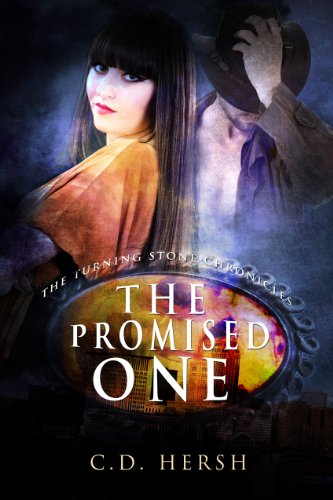
Book one of the chronicles titled “The Promised One” available on Amazon
In the wrong hands, the Turning Stone ring is a powerful weapon for evil. So, when homicide detective Alexi Jordan discovers her secret society mentor has been murdered and his magic ring stolen, she is forced to use her shape-shifting powers to catch the killer. By doing so, she risks the two most important things in her life—her badge and the man she loves.

Rhys Temple always knew his fiery cop partner and would-be-girlfriend, Alexi Jordan, had a few secrets. He considers that part of her charm. But when she changes into a man, he doesn’t find that as charming. He’ll keep her secret to keep her safe, but he’s not certain he can keep up a relationship—professional or personal.

Danny Shaw needs cash for the elaborate wedding his fiancée has planned, so he goes on a mugging spree. But when he kills a member of the secret society of Turning Stones and steals a magic ring that gives him the power to shape shift, Shaw gets more than he bargained for.

Book two of The Turning Stone Chronicles titled “Blood Brothers” available on Amazon.
When Delaney Ramsey is enlisted to help train two of the most powerful shape shifters the Turning Stone Society has seen in thousands of years, she suspects one of them is responsible for the disappearance of her daughter. To complicate matters, the man has a secret that could destroy them all. Bound by honor to protect the suspect, Delaney must prove his guilt without losing her life to his terrible powers or revealing to the police captain she’s falling for that she’s a shape shifter with more than one agenda.

The minute Captain Williams lays eyes on Delaney Ramsey, he knows she’s trouble. Uncooperative, secretive, and sexy, he can’t get her out of his mind. When he discovers she has a personal agenda for sifting through all the criminal records in his precinct, and secretly investigating his best detective, he can’t let her out of his sight. He must find out what she’s looking for before she does something illegal. If she steps over the line, he’s not certain he can look the other way for the sake of love.

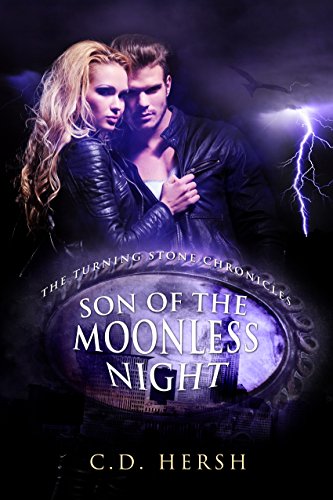
Book three of The Turning Stone Chronicles titled “Son of the Moonless Night” currently available on Amazon.
Owen Todd Jordan Riley has a secret. He’s a shape shifter who has been hunting and killing his own kind. To him the only good shifter is a dead shifter. Revenge for the death of a friend motivates him, and nothing stands in his way . . . except Katrina Romanovski, the woman he is falling in love with.

Deputy coroner Katrina Romanovski has a secret, too. She hunts and kills paranormal beings like Owen. At least she did. When she rescues Owen from an attack by a werebear she is thrust back into the world she thought she’d left. Determined to find out what Owen knows about the bear, she begins a relationship meant to collect information. What she gets is something quite different love with a man she suspects of murder. Can she reconcile his deception and murderous revenge spree and find a way to redeem him? Or will she condemn him for the same things she has done and walk away from love?

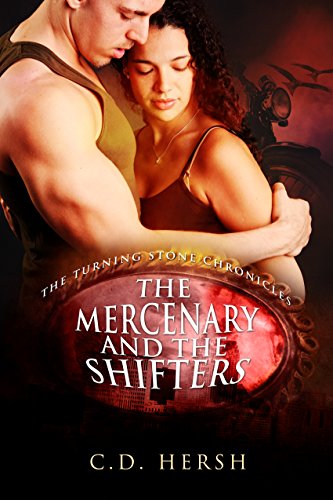
Book four of The Turning Stone Chronicles titled “The Mercenary & the Shifters” available on Amazon.
A desperate call from an ex-military buddy lands a mercenary soldier in the middle of a double kidnapping, caught in an ancient shape shifter war, and ensnared between two female shape shifters after the same thing ... him.

The first four books of their paranormal romance series entitled The Turning Stone Chronicles Series page are available on Amazon. Their standalone novella, Can’t Stop The Music, is in the Soul Mate Tree collection with twelve other authors from various genres.

Putting words and stories on paper is second nature to the husband and wife co-authors whose pen name is C.D. Hersh. They’ve written separately since they were teenagers and discovered their unique, collaborative abilities in the mid-90s while co-authoring a number of dramas, six which have been produced in Ohio, where they live. Their interactive Christmas production had five seasonal runs in their hometown and has been sold in Virginia, California, and Ohio. As high school sweethearts, Catherine and Donald believe in true love and happily ever after. Which is why they write it!

When they aren’t collaborating on a book, they enjoy reading; singing; theatre and drama; traveling; remodeling houses (Donald has remodeled something in every home they’ve owned); and antiquing. Catherine, who loves gardening, has recently drawn Donald into her world as a day laborer. Catherine is an award-winning gardener — you can see some of her garden on their website.

They are looking forward to many years of co-authoring and book sales, and a lifetime of happily-ever-after endings on the page and in real life.

You can see excerpts of their books, connect with, and follow C.D. Hersh at:

Website

Facebook

Amazon Author Page

Twitter

Monday, November 23, 2020

A Child’s Narrative

from Elliott Baker 

I do not have an advanced degree in psychology. I am the proud owner of a BA in history which was chosen as the least onerous way I could spend four years. I figured it would involve mostly reading and I liked to read, even then. So, if you need an expert to entertain someone’s thoughts, you may need to stop here. 

Like you, I can look out and see a pretty messed up situation. And like you, I think about it. Since I am a writer, I naturally see things as stories, narratives. It occurred to me that we are acting in a child’s narrative. Sally and I have three children and five grandchildren and I have loved and watched each closely. ADD runs in our family, so I have had more occasion to think about their paths. In my view, children are not immoral, they are amoral. That their actions might hurt someone else, or even themselves in the long run does not occur to them. They mostly don’t say to themselves, “that’s bad, but I’m going to do it anyway.” They say, “I want this. Now.” 

Image by akos147 from Pixabay
 We are living in a child’s narrative. This narrative’s   defining characteristic is ‘Me and not me.’ With rare   interruptions, the child sees the world in shades of   black and white where the adult has run into blue   and red and knows the world to be more complex   than that. The fact that we add a year’s chronological   age every year doesn’t guarantee that our maturity or   awareness grows at the same pace. Many of us get to   the end of this particular narrative without gaining   much in the way of awareness. If I believed that 80   years is all we have to accumulate greater awareness,   I’d be angry, frustrated, and fearful, but since I choose to trust that we have every moment we need to evolve, I don’t entertain fear as often as I might. That is, right up to the point when I buy into the hypnotic, seductive, child’s narrative with all its resentments and anger and sadness. The child within me grabs hold of its ‘Me and not me’ perspective as it leaches all of the colors from the world leaving only black or white. And I am left feeling frustrated and frightened for myself and those I love. 

What can I do? Observe first without judgement. Not so easy, but it can be done. Survey the problem and parts of it fall away, but not all. There are action steps to change. 

I don’t have to act in this particular play that my ego (child within) is thrilled to produce. Each moment is about choices and the more balanced the mind, the better the choices. Fear is not balance. The child’s narrative (ego) is in business to disconnect you from everyone and everything in order to maintain the illusion of control. Control is the aim of the ego, pure and simple. If the child can control everything, including the adults around him or her, he will be safe. Not true, of course, but that is the child’s underlying motivation. Add in the desire for immediate gratification, and you have the child’s narrative. It’s a story, like any other, but now that I see it, it isn’t the story I want to play in. 

So, what can I do? Aren’t I chained to this reality, to this narrative? Not so much. Oh, there are chains all right, but take a good look at them. Do it now. Look at the chains of thought that bind you to anything. Who made those chains? I did, for me. So, can I just make ‘em disappear? Yeah, wouldn’t that be nice. Thing is it took some time to lay down our part in the narrative and it will take some time to dematerialize those chains. Not as much time as our ego wants us to believe, but some. How do I do it? 

Not by fighting a war. Every strike at an opponent, while it feels so good in the moment, only solidifies the narrative. Remember, we want to change narratives. At least I do. I’m tired of feeling sad about the chances for my beloved grandchildren to find a satisfying life. 

The child’s narrative is a habit we have accepted. Is it possible to change destructive habits? You bet. There are plenty of folks who have beaten horrible addictions. Like the lion in the Wizard of Oz, they aren’t any stronger than you or I, they just decide and do not turn back. 

How do I change this habit, this narrative? 

When I was in my twenties, I worked as a life guard in a resort in upper state New York. There was one guy there who was so cool. He got all the girls, and was just, for lack of a better description, cool. I aspired to be cool so I watched what he said and did that was so attractive to the opposite sex. He spoke in a very, to me, cool way by adding the word ‘like’ before his sentences. “Like, why don’t we go grab a drink.” Every sentence was preceded by the word ‘like.’ Aha, that’s his secret. As I said, he was cool. So, I added the word into my vocabulary and used it profusely. 


My mom had occasion to visit and we went to a Broadway show. Actually, I remember the show, George M with Joel Gray. Great show about George M Cohan. I digress. Afterward we went out to eat. I was talking about something, and she said, “Like what?” I repeated whatever I thought she hadn’t caught or understood. (My mom’s a real smart person and her hearing is fine, so I should have caught on earlier, but it took me a few times.) So, I repeated what I had said, and she again said, “Like what?” I said it again and she echoed “Like what?” Ah. Finally got to me. By that time, I had gotten over how cool this guy was, but my speech hadn’t reflected that awareness. 

“I say it a lot, huh?” She just smiled. “Sounds pretty stupid, huh?” Again, she just smiled. (Did I say how smart she is?) Well, I’ll just stop saying the word like. Not so easy. Habit. She helped me. Every time I said “Like,” she’d say, “Like what?” Took me all that night and the next day. 

Unfortunately, we don’t have someone saying “Like what?” every time we replay a habit, so they aren’t as easy to change and often take more than a day and a half. Some years later, when I found the less than useful vocal addition, “You know,” had crept into my speech, I decided to delete it. Once again, not so easy. So, I had a choice between listen to the ego, “It’s too hard, you can’t do this. You don’t have anyone to help you.” Or create my own “Like what?” to pry that habit out of there. “I did this once before; I can do it again.” Hah.., (Damn, a semicolon. How pretentious can you get? It was an accident. Windows did it.) 

The first few times I actually heard myself saying “You know,” (And there were plenty I didn’t hear.) I was pretty frustrated. I then realized that I wasn’t even hearing it most of the time. So, I began listening for its unwelcome appearance. I decided the first thing was not to get angry at myself as that didn’t seem to speed things up. Just observe. At first, I would hear myself say “You know,” maybe five or six times a day, and each time I would be determined to catch it before I said it and not say it. I managed to ditch the anger and frustration, and I told my ego to go sit on the bench. I was doing this. But it was like that illusive cricket that managed to get into your bedroom. Every time you think about it or move toward it, it quiets down and you can’t find it. Then it starts up and you can’t sleep. 

Finally, as I was about to say something to someone, my brain paused for me to act. I chose not to say, “You know.” Victory. I did it. Not so much. Two sentences later, there it was. Crap. Still, what I could do once I could repeat. Took me some time, but I stopped saying, “You know.” 

A visual would be if you ran a pencil along a school desk until you’d made a nice trough. Not that you would ever do that. Once the trough (habit) is dug, the pencil goes along easily. Well, yes, but a straight line is boring and I’m, uh, someone, is much more creative than that so let’s make a Y. At first it’s hard to get the pencil out of the rut (habit) I’ve, we’ve dug, but once it jumps the moat, the leg of the Y is created and then with a little application, it’s easier to push the pencil along the new trough (habit) than the old. Will and persistence. And ditch the anger. You might not be able to get to forgiveness, which is way more powerful, but we can just set the anger aside. Remove our attention from it. Not every time at first, but once we get the hang of it, it can be done. 

Why should we devote our attention and energy to creating a new narrative, a more adult narrative? The simple answer is it hurts less. And if enough of us refuse to live in the child’s narrative, the script will change. And we and our grandchildren will be in a richer story with greater possibilities to create a more satisfying and happy life.

Award winning, international playwright Elliott B. Baker grew up in Jacksonville, Florida. With four musicals and one play published and done throughout the United States, New Zealand, Portugal, England, and Canada, Elliott is pleased to offer his first novel, Return, book one of The Sun God’s Heir trilogy.

A member of the Authors Guild and the Dramatists Guild, Elliott lives in New Hampshire with his beautiful wife Sally Ann.

Learn more about Elliot Baker on his website. Stay connected on Twitter and Facebook. Like Elliott's Author Page on Facebook to learn all his latest news.

Monday, August 24, 2020

LAW of SMALL THINGS

by Elliott Baker

Photo by Annie Spratt on Unsplash
I was sitting next to my four-year-old grandson and he began his sentence with, “When I was a little kid…” We all see ourselves as more enlightened than we probably are. Just the nature of our egos.

One of the prime reactions of the younger part of ourselves is to direct responsibility elsewhere. We all do it. “Wasn’t me.” He did it, she did it.” If we are energy beings, collections of energy, and quantum theory as well as current scientific consensus says we are, then additional energy feels good, and less energy feels bad. We approach the one and avoid the other. Accepting responsibility costs us energy in the short term, but often saves us more in the long term. Here’s where delayed gratification comes in. We develop delayed gratification as we mature. Would I rather go to a movie, energy resource, than go to work, boring energy suck? You bet. But through a certain amount of learning pain, I choose the latter in order to pay for two movies at a later date. It works.

Exhausting fear through anger while displacing responsibility feels good in the moment, but does nothing to affect the cause of the fear, leaving it to grow larger while it continuously drains our energy.

Our most common response is, “What can I, one person, do against a worldwide problem?” The obvious answer is nothing and so I vent that fear through anger, all the while telling myself that I am helping the cause. I’ve done something because I shared my resentment with someone else and allowed them to share theirs in return. We both feel better getting that momentary relief from the emotional pressure of fear. Problem is, I wonder if that response does anything other than add energy to the problem without actually assisting in its solution.

Image by ipicgr from Pixabay 
Well, what can I do against the momentum of eight billion people? In physics there is something known as ‘weak force.’ I have to assume that it’s named that because each individual reaction is, well, weak. But in aggregate, it performs crucial work allowing for some spectacular results. Among others, it initiates the nuclear fusion that fuels our sun. Fairly significant. The law of small things.

What if, instead of venting our fear energy, we channel it into a positive exchange? Support another life stream in any way you can, whenever it occurs to you to do so. The size of the energy you expend is unimportant. That you sent the energy out in support of another, no matter how small or unmeasurable it might seem is everything. The law of small things will take it from there. Choose intent over outcome. Our control over the outcome of things is suspect anyway.

Venting resentment does little but congeal into violence which in turn does nothing but create more resentment which…

Why not try something different for a change. Compliment a friend or loved one. Add positive energy to the miasma of fear that currently envelops us all. Power is unimportant. Frequency is unimportant. Intent is everything. The law of small things.

Here is a little from my first novel in The Sun God's Heir series. I hope you enjoy it.

René Gilbert awoke shackled to the wall of a four-foot-high ship’s slave hold.

The filthy bilge water splashed over his head and then receded. Under sail.

The North Atlantic, 1672. To survive René must escape a slave ship in the midst of the ocean.

Focus on the first thing, his fencing master’s voice rose from within his memory.

“Don’t drown,” he thought. His second thought was the memory of a wooden rod speeding toward him for his sarcasm.

Rapier sharp, pulse pounding action across the warp and weave of the seventeenth century. Sailing ships, pirates, and past lives contend in this first book of an award-winning trilogy.

Bordeaux, France

Three men bled out into the dirt.

René stared at the hand that held the bloody rapier. His hand. Tremors shuddered through his body and down his arm. Droplets of blood sprayed the air and joined the carmine puddles that seeped into the sun-baked earth. He closed his eyes and commanded the muscles that grasped the rapier to release their tension and allow the sword to drop.
Years of daily practice and pain refused his mind’s order much as they had refused to spare the lives of three men. The heady exultation that filled him during the seconds of the fight drained away and left him empty, a vessel devoid of meaning. He staggered toward an old oak and leaned against its rough bark. Bent over, with one hand braced on the tree, he retched. And again. Still, the sword remained in his hand.

A cloud shuttered the sun. Distant thunder brushed his awareness and then faded. Rain. The mundane thought coasted through his mind. He wiped his mouth on his sleeve and glanced down hoping to see a different tableau. No, death remained death, the only movement, that of flies attracted to a new ocean of sustenance.

The summer heat lifted the acrid blood-rust smell and forced him to turn his head away. Before him stretched a different world from the one in which he had awakened. No compass points. No maps. No tomorrow.

Buy Links


Award winning, international playwright Elliott B. Baker grew up in Jacksonville, Florida. With four musicals and one play published and done throughout the United States, New Zealand, Portugal, England, and Canada, Elliott is pleased to offer his first novel, Return, book one of The Sun God’s Heir trilogy.

A member of the Authors Guild and the Dramatists Guild, Elliott lives in New Hampshire with his beautiful wife Sally Ann.

Learn more about Elliot Baker on his website. Stay connected on Twitter and Facebook. Like Elliott's Author Page on Facebook to learn all his latest news.

Monday, July 20, 2020

Craft the Change

from Elliott Baker

Photo by Brooke Cagle on Unsplash
When you hear a joke, whether by surprise or skating along a fearful or embarrassing subject, your body automatically prepares to freeze, run, or fight. It marshals energy sending it to the appropriate centers to prepare for immediate action. In a real fear situation, the physical after effect is often trembling as the muscles vibrate to release unused tension. Laughter, like vented anger is another exhaust valve for this unused energy. Good comedians can craft stories that take us right to the edge of fear without pushing us over. Great comedians can see the energy build in the moment and intuitively know when to allow its release in laughter.

As a playwright, I’ve had the privilege of working with great comedic actors. Two in particular come to mind. Energy is energy and can be directed where we will. Certain moments in a story will be sad or frightening and the playwright mostly crafts the energy line where he wants it, releasing the tension at a point and in a way that he feels supports and furthers the story. An intuitive actor will recognize the accumulated energy point and know that it can be released by the audience as laughter with only an ad lib word. So, these two brilliant comedic actors would recognize those moments and champ against not being able the receive the wash of laughter and attention that one ad lib word would release. They would usually make it till the end of the run, sometimes the last night, and then, they’d pull on that string and the audience would release that tension in gales of laughter. As the playwright, it didn’t light me up, but I accepted it as a cost of having these brilliant actors bring my words to life. And I am still incredibly grateful to them both. Energy can be used for whatever we choose.

Image by Firentis from Pixabay
So, what can this possibly have to do with the soul-destroying racism that we are face to face with? I’ll offer one disclaimer here. I’m not a psychologist nor do I have an advanced degree or initials after my name. I am a thoughtful human, just like you. Our existence here is a result of our grouping together to craft more creative and life supportive responses to life’s threats. Racism is a threat to all of us, to our future existence. Some is not a life supportive word.

Living organisms only change the status quo in response to threat. We now have an opportunity. Now. The proponents of the status quo know this and will use every method to encourage our exhausting the energy of the moment before it can congeal into change. They will goad us to action, usually destructive which accomplished their intention venting the threat to their status quo. No matter how self-serving and threatening to our continued existence the status quo might be. We can tremble or vent in rage or use this energy moment to craft concrete steps to initiate change. Will these steps be the magic answer? Probably not, but they will be a beginning which is more powerful than all the anger and platitudes. Anger is easier and frankly, in the moment feels so good to exhaust that tension and energy. Sitting still, holding on to the energy of anger is hard. Putting pencil to paper and coming up with concrete steps toward change is even harder especially when you know that at least some of what you say will be gainsaid and ridiculed. That’s where courage gets its opportunity to come on stage. It’s been waiting in the wings for its cue. It’s always been standing in the wings for all of us.

Step one:
We/I’ve made a mistake. We/I can do better.

Step two:
Delineate the mistake as clearly as possible, both as existing habit/rule and traditional response.

Tear the mistake into as many pieces as you can. Put each piece of the mistake under a microscope. Throw tradition into the trash. Evolution considers all possibilities, and even some that may not look possible.

Step three:
Craft the change. Revise.

But… Here come the buts. But we’re only one institution/person. How can this possibly have an effect on the whole?

Photo by Matt Collamer on Unsplash
Energy is thought. Thought is energy. I call it the law of small things. I won’t waste time trying to support the science of a thought gaining power until it goes viral. Nothing is lost. Energy is not destroyed. Time spent thinking creatively and positively is never wasted. Even this rambling discourse which no one may ever see is not wasted. I care. And this is my best effort at supporting the social evolution I see as absolutely necessary for humanity’s survival. More than that, I adore my children and grandchildren, and most of my moments these days are spent worrying about the quality of life they will have, or if they’ll have life at all. We are so beautiful. All of us, the children and the adults no matter each one’s chronological age. Please don’t waste energy on punishment, rather direct it toward your best creative potential in compassion and we’ll come out of this as amazing as we’re meant to be.

In 1969 I failed. I protested, I railed against the status quo. We failed. We allowed our collective energy to dissipate. We pulled the string on the moment and released its energy. The opportunity passed by as opportunities will. Fortunately, they come around again. As long as we survive, we will get another chance. Until we don’t. This is your time. Do the homework. Be specific. Gather resources and consensus. Quietly, peacefully, gather the energy of the moment and direct it like a laser against our childish abuse of each other. PERSIST. Our grandchildren are counting on you. Yes, mine and yours to be.

Here is a little from my first novel in The Sun God's Heir series. I hope you enjoy it.

René Gilbert awoke shackled to the wall of a four-foot-high ship’s slave hold.

The filthy bilge water splashed over his head and then receded. Under sail.

The North Atlantic, 1672. To survive René must escape a slave ship in the midst of the ocean.

Focus on the first thing, his fencing master’s voice rose from within his memory.

“Don’t drown,” he thought. His second thought was the memory of a wooden rod speeding toward him for his sarcasm.

Rapier sharp, pulse pounding action across the warp and weave of the seventeenth century. Sailing ships, pirates, and past lives contend in this first book of an award-winning trilogy.

Bordeaux, France

Three men bled out into the dirt.

René stared at the hand that held the bloody rapier. His hand. Tremors shuddered through his body and down his arm. Droplets of blood sprayed the air and joined the carmine puddles that seeped into the sun-baked earth. He closed his eyes and commanded the muscles that grasped the rapier to release their tension and allow the sword to drop.
Years of daily practice and pain refused his mind’s order much as they had refused to spare the lives of three men. The heady exultation that filled him during the seconds of the fight drained away and left him empty, a vessel devoid of meaning. He staggered toward an old oak and leaned against its rough bark. Bent over, with one hand braced on the tree, he retched. And again. Still, the sword remained in his hand.

A cloud shuttered the sun. Distant thunder brushed his awareness and then faded. Rain. The mundane thought coasted through his mind. He wiped his mouth on his sleeve and glanced down hoping to see a different tableau. No, death remained death, the only movement, that of flies attracted to a new ocean of sustenance.

The summer heat lifted the acrid blood-rust smell and forced him to turn his head away. Before him stretched a different world from the one in which he had awakened. No compass points. No maps. No tomorrow.

Buy Links


Award winning, international playwright Elliott B. Baker grew up in Jacksonville, Florida. With four musicals and one play published and done throughout the United States, New Zealand, Portugal, England, and Canada, Elliott is pleased to offer his first novel, Return, book one of The Sun God’s Heir trilogy.

A member of the Authors Guild and the Dramatists Guild, Elliott lives in New Hampshire with his beautiful wife Sally Ann.

Learn more about Elliot Baker on his website. Stay connected on Twitter and Facebook. Like Elliott's Author Page on Facebook to learn all his latest news.